Exactly How Memory Care Sustains Behavioral Adjustments and Psychological Requirements
Business Name: BeeHive Homes of Henderson
Address: 1000 Greenway Rd, Henderson, NV 89002
Phone: (702) 551-0265
BeeHive Homes of Henderson
At BeeHive Homes of Henderson, Nevada, we offer the finest assisted living and memory care experience available in a cozy, comfortable homelike setting. Each of our residents has their own spacious room with an ADA approved bathroom and shower. We prepare and serve delicious home-cooked meals three times a day every day. We maintain a small, friendly community of only 20 residents per home. We provide regular activities that our residents find fun and contribute to their health and well-being. Our staff is attentive and caring and provides assistance with daily activities to our residents in a loving and respectful manner. We would like to invite you to tour and experience our memory care & assisted living home and feel the difference.
1000 Greenway Rd, Henderson, NV 89002
Business Hours
Memory loss adjustments greater than recall. It can alter mood, rest, hunger, communication, confidence, and the means a person reacts to every day life. A parent who was when individual may become dubious. A spouse that used to choose effortlessly might currently freeze when asked what they desire for lunch. Somebody that never wandered might begin pacing at sundown, persuaded they require to "go home." These shifts can be distressing for family members, especially when they arrive in small actions that are simple to reject at first.
That is where memory care makes an actual difference. Great memory care is not almost keeping a person safe when they neglect names or misplace secrets. It is developed to sustain the psychological truth of memory loss, which usually includes worry, aggravation, shame, pain, and confusion. When behavior changes show up, they are seldom arbitrary. They normally indicate a need that the person can no more discuss plainly. Memory care provides personnel the training, structure, and persistence to review those signals and respond with skill.
Behavioral changes are commonly communication
One of the hardest lessons for family members is that difficult habits generally indicate something much deeper is taking place. A person dealing with dementia might not be able to state, "I am overstimulated," or "I feel harmful in this space," or "I am grieving the loss of control." Instead, the sensation appears as anxiety, shouting, refusal, resistance to bathing, or shadowing a caretaker from room to room.
Experienced memory care teams look beneath the behavior. They ask what altered, what time it takes place, whether the person is starving, worn out, overstimulated, bored, in pain, or reacting to a new environment. That kind of monitoring matters since several behaviors are not indicators of defiance in any way. They are attempts to maintain self-respect or restore a feeling of control.
I have seen citizens end up being combative throughout clothing time simply due to the fact that the area was cool and the procedure felt hurried. As soon as the team slowed down, warmed up the room, and discussed each step prior to touching apparel, the same individual came to be tranquil and participating. The issue was never ever the clothing. It was the experience of being dealt with without sufficient context.
That kind of adjustment is one of the quiet strengths of memory care. Caretakers discover to translate behavior as information. A rejection comes to be information. A duplicated inquiry comes to be a clue. An abrupt adjustment in regimen might point to pain, fear, or discomfort. This approach aids prevent the cycle that typically takes place in the house, where one difficult minute leads to an additional and everybody finishes the day exhausted.
Why memory care can alleviate anxiousness and confusion
People living with dementia often do better when life comes to be extra foreseeable. Memory care areas are made around that concept. Routines tend to be consistent. Team usage acquainted routines. Rooms are less complicated to browse. Dishes happen at regular times. Doors, hallways, and usual locations are set up to reduce confusion instead of contributing to it.
That predictability can reduce stress and anxiety in a way that households sometimes undervalue. If you have ever checked out a place that felt as well loud, as well active, or too strange, you understand just how quickly your body can tense up. Now think of living with memory loss, where even a small change in lighting, furnishings, or staffing might really feel threatening.
A thoughtful memory care environment helps in reducing those triggers. Better lighting can lessen shadows that trigger misinterpretation. Clear sightlines can make it less complicated to move without concern. Familiar items, classified spaces, and secure regimens can lower the daily worry of identifying where things are and what happens following. When a resident does not need to invest so much energy translating the atmosphere, they frequently have more perseverance for everything else.
This is also why households searching for memory care near me are normally encouraged to tour face to face, when possible. The physical setting issues. An area might appear outstanding on paper, however if it feels chaotic, confined, or complicated, citizens may struggle. The best senior living near me options for memory assistance are frequently the ones that feel tranquil the minute you tip within, not just polished in a brochure.
Emotional requirements do not disappear with memory loss
There is an usual blunder households make, generally out of inflammation. They begin speaking as if the individual with dementia no longer needs emotional depth. The discussions get much shorter. The tone ends up being childish. Decisions are made over the resident's head due to the fact that it appears easier. However psychological requirements continue to be, often with also higher strength than before.
People with memory loss still require to really feel revered, assured, included, and understood. They still need choice, even if the selections require to be simpler. They still need privacy, convenience, and moments of authentic link. Oftentimes, they require a lot more affirmation than they made use of to, due to the fact that they are dealing with duplicated experiences of failing and confusion.
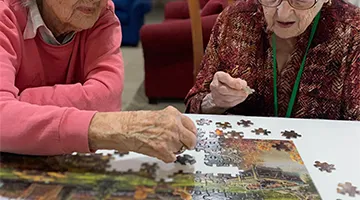
Memory care takes notice of that psychological layer. Staff are educated to avoid remedying every small blunder, because continuous correction can shame a person and escalate distress. If somebody urges their mother is pertaining to choose them up, the goal is not to win a debate regarding timelines. The objective is to recognize what the declaration implies psychologically. Often it suggests the person desires comfort, experience, or authorization to stop fretting for a moment.
That level of sensitivity can transform the tone of an entire day. A resident who really feels heard may settle down after a meal, join an activity, or accept aid they would have declined fifteen minutes previously. Emotional safety is not a soft extra. It is part of the care itself.
The function of proficient routines
Routine can look uninteresting from the exterior. In memory care, it frequently resembles one of the most valuable devices in the structure. A stable early morning series, acquainted mealtimes, routine activity blocks, and foreseeable bedtime signs can all minimize stress. The point is not to make life rigid. The factor is to give the day enough shape that the resident does not need to maintain restoring truth from scratch.
This is especially practical for people who sundown in the late afternoon or early night. When tiredness constructs, complication can intensify. A resident might end up being troubled, suspicious, or tearful as the light modifications. In a home setup, that can spiral quickly if everybody is trying to handle supper, drugs, and various other evening jobs at the exact same time. In memory care, personnel acknowledge those patterns and adjust. They might use a quieter atmosphere, redirect to a soothing activity, or postpone a stressful task until the person is more settled.
The right regimen also assists with transitions, which are often a significant source of distress. Moving from breakfast to an activity, from an activity to a shower, or from one caregiver to one more can cause resistance. A familiar phrase, a regular method, or a small sign like songs can make a shift much smoother. These are small treatments, but over time they amount to an extra tranquil day.
Behavior modifications that memory care takes care of well
Not every challenging day looks the exact same, and memory care staff require a broad toolkit. Some residents end up being verbally agitated. Others take out. Some pace. Some withstand care. Some attempt to leave. Some weep more conveniently than they made use of to. A solid memory care program does not treat every one of these the same way. It reacts to the individual, the moment of day, the history behind the behavior, and the existing physical state.
There are a few patterns memory care is specifically good at handling:
The first is resistance to individual care. Bathing, clothing, toileting, and grooming can really feel invasive when memory suffers. Team in memory care are usually better at maintaining personal privacy, providing selections, and pacing the job in a manner that secures dignity.
The second is repeated examining. As opposed to meeting the concern with stress, caretakers can answer steadly memory care near me and consistently, after that reroute to something grounding. A resident asking where their partner is may not keep the response, however they might still react to peace of mind and an acquainted object or activity.
The 3rd is straying or exit-seeking. This habits can be hazardous in a basic setup, but memory care neighborhoods are built with safety and supervision in mind. More importantly, personnel frequently search for the underlying reason. The person might be searching for job, for a parent, for home, or for motion since resting still really feels unbearable.
The 4th is agitation connected to unmet physical demands. Discomfort, irregular bowel movements, dehydration, hunger, drug side effects, and rest interruption can all appear as actions prior to they appear as a grievance. Because memory care personnel see homeowners often and observe patterns closely, they are in a better setting to catch those signs early.
Families require alleviation too
When one person's memory declines, the whole family members system adjustments. Grown-up youngsters might become hands-on coordinators, advocates, and over night problem-solvers. Partners might end up being full time caretakers while also regreting the loss of collaboration as they understood it. Siblings might differ about what is happening or what must take place following. It is a whole lot to carry, specifically when actions changes maintain intensifying and nobody is resting well.
This is one reason memory care can seem like a transforming point. It does not eliminate sorrow, but it can replace unrelenting watchfulness with shared assistance. Families no more have to manage every medication tip, every dish, every minute of confusion, and every midnight wake-up alone. That alleviation issues. It can bring back sufficient power for visits that really feel affectionate once more as opposed to simply task-driven.
There is additionally a psychological advantage that is easy to miss out on. When member of the family are no more the single enforcers of showering, consuming, or moving to the following job, the connection can soften. A child can rest and hold her father's hand without requiring to suggest with him concerning socks. A spouse can delight in a walk as opposed to chasing a restless partner via your home. That change does not make the ailment much less genuine, yet it can protect more of the relationship.
For several households thinking about elder care, that equilibrium is the deciding variable. They are not looking for perfection. They are trying to find a much safer, steadier rhythm, one that gives the individual with memory loss better care and provides the living room to breathe.
The worth of personalized approach
Good memory care is not one-size-fits-all. The very best communities find out a resident's background, choices, habits, and sets off. A former instructor might enjoy talking about publications or aiding establish chairs. A retired technician might calm down while arranging tools or checking out old images of automobiles. Somebody who never ever liked groups may do far better in a silent edge than at a team event. These details matter because experience often unlocks to cooperation.
Personalized care likewise assists with emotional demands that are simple to miss. A resident might appear "difficult" till team understand that a certain track, odor, or structure calms them. A male that keeps trying to leave may have spent his adult life walking to operate at 7 a.m., and his body still expects that motion. A female who ends up being tearful throughout mid-day care may have had bad experiences with rushed help years back. Memory care functions best when it treats these patterns as part of the person's story, not equally as signs and symptoms to manage.
That strategy takes even more time at the beginning, yet it conserves time later on. Much less resistance means less battle. Much less struggle indicates safer care. More secure care suggests fewer injuries, less outbursts, and an extra sensible day for everybody involved.
When respite care assists the transition
Sometimes households require memory care completely. Often they need a temporary reset. Respite care can be a useful bridge either way. A short keep enables the household caregiver to remainder, travel, recoup from illness, or simply go back enough time to see the circumstance a lot more clearly. It likewise lets the resident experience the environment prior to making a longer decision.
That can be specifically handy when behavioral modifications are ending up being difficult to manage in your home. Family members often reach a point where they are worn down however still uncertain whether full-time assistance is the appropriate move. A respite keep can show what structured care seems like everyday. It can likewise disclose just how much of the resident's anxiety was connected to irregular sleep, caretaker exhaustion, or a home configuration that no longer fits their needs.
I have actually seen families discover that a two-week respite remain caused calmer evenings, much better meals, and much less debates over individual care. That does not suggest home care stopped working. It indicates the demands had outgrown the readily available assistance. Often that understanding comes slowly. Often it lands at one time. Either way, respite care can offer clarity.
What to search for when picking memory care
Choosing an area is not nearly discovering a tidy building or a practical address. It has to do with discovering the appropriate design of assistance for a certain person. The team should have the ability to describe just how they handle behavior changes, how they communicate with households, and exactly how they adjust care when emotional needs shift. If a neighborhood talks only about services and not regarding everyday care, that is a caution sign.
Pay interest to how team speak to residents during a visit. Do they rush, correct, or talk over them? Or do they pause, make eye contact, and provide calm reassurance? Those small communications tell you a large amount concerning the society. The best programs do not just assure safety. They lionize in the ordinary moments.
It also assists to ask how the community manages brand-new admissions, rest disturbance, sundowning, and rejections of care. Ask what takes place when a resident ends up being dismayed. Ask how households are maintained in the loophole. Ask whether care strategies are upgraded as habits modifications. If you are comparing senior care options or looking for senior living near me, these concerns will inform you more than a sleek tour package ever before could.
A steadier life is often possible
Memory loss brings real losses, and there is no kind means to minimize that. Still, a medical diagnosis does not indicate each day needs to really feel disorderly. With the appropriate assistance, many people end up being calmer, much safer, and much more comfortable than they were previously. They might still fail to remember names. They may still duplicate stories. They might still require help with nearly whatever. Yet they can also really feel a lot more worked out, a lot more comprehended, and much less afraid.
That is the deeper promise of memory care. It does not try to remove the reality of cognitive decrease. It attempts to meet that reality with perseverance, framework, and emotional knowledge. It supports behavioral adjustments by looking for suggesting rather than simply handling interruption. It sustains psychological needs by dealing with dignity as an everyday method. And for family members looking for memory care near me, that mix can be the distinction between barely dealing and finally feeling like there is a course forward.
BeeHive Homes of Henderson provides assisted living care
BeeHive Homes of Henderson provides memory care services
BeeHive Homes of Henderson provides respite care services
BeeHive Homes of Henderson supports assistance with bathing and grooming
BeeHive Homes of Henderson offers private bedrooms with private bathrooms
BeeHive Homes of Henderson provides medication monitoring and documentation
BeeHive Homes of Henderson serves dietitian-approved meals
BeeHive Homes of Henderson provides housekeeping services
BeeHive Homes of Henderson provides laundry services
BeeHive Homes of Henderson offers community dining and social engagement activities
BeeHive Homes of Henderson features life enrichment activities
BeeHive Homes of Henderson supports personal care assistance during meals and daily routines
BeeHive Homes of Henderson promotes frequent physical and mental exercise opportunities
BeeHive Homes of Henderson provides a home-like residential environment
BeeHive Homes of Henderson creates customized care plans as residents’ needs change
BeeHive Homes of Henderson assesses individual resident care needs
BeeHive Homes of Henderson accepts private pay and long-term care insurance
BeeHive Homes of Henderson assists qualified veterans with Aid and Attendance benefits
BeeHive Homes of Henderson encourages meaningful resident-to-staff relationships
BeeHive Homes of Henderson delivers compassionate, attentive senior care focused on dignity and comfort
BeeHive Homes of Henderson has a phone number of (702) 551-0265
BeeHive Homes of Henderson has an address of 1000 Greenway Rd, Henderson, NV 89002
BeeHive Homes of Henderson has a website https://beehivehomes.com/locations/henderson/
BeeHive Homes of Henderson has Google Maps listing https://maps.app.goo.gl/qpZ3TKgbxCu1MVSh8
BeeHive Homes of Henderson has Instagram page https://www.instagram.com/beehivehomeshenderson/
BeeHive Homes of Henderson has an YouTube page https://www.youtube.com/@hamiltonshives4468
BeeHive Homes of Henderson won Top Assisted Living Homes 2025
BeeHive Homes of Henderson earned Best Customer Service Award 2024
BeeHive Homes of Henderson placed 1st for Senior Living Communities 2025
People Also Ask about BeeHive Homes of Henderson
What is BeeHive Homes of Henderson Living monthly room rate?
Our base rate is $4,700 per month for assisted living and $5,700 per month for memory care plus a one-time community fee of $2,500. We do an assessment of each resident's needs prior to move-in, so each resident's rate may be higher. These prices fall into three tiers based on resident needs and range from $4,700/month to $7,300/month. However, after we do the assessment and quote a price, there are no add-ons or hidden fees
Does Medicare and Medicaid pay for a stay at Bee Hive Homes?
Medicare pays for hospital and nursing home stays, but does not pay for assisted living. Some assisted living facilities are Medicaid providers but we are not. We do accept private pay, long-term care insurance, and we can assist qualified Veterans with approval for the Aid and Attendance program
Do we have a nurse on staff?
We do have a nurse on contract who is available as a resource to our staff but our residents' needs do not require a nurse on-site. We always have trained caregivers in the home and awake around the clock
What can you tell me about the food at Bee Hive?
You have to smell it and taste it to believe it! We use dietitian-approved meals with alternates available for flexibility, and we can accommodate needs for different textures and therapeutic diets. We have found that most physicians are happy to relax diet restrictions without any negative effect on our residents
Do we allow pets?
We do allow small pets as long as the resident is able to care for them. State regulations also require that we have evidence of current immunizations for any required shots
Where is BeeHive Homes of Henderson located?
BeeHive Homes of Henderson is conveniently located at 1000 Greenway Rd, Henderson, NV 89002. You can easily find directions on Google Maps or call at (702) 551-0265 Monday through Sunday 9:00am to 5:00pm
How can I contact BeeHive Homes of Henderson?
You can contact BeeHive Homes of Henderson by phone at: (702) 551-0265, visit their website at https://beehivehomes.com/locations/henderson/ or connect on social media via Instagram or Facebook
Take a drive to Yoshiya Japanese Kitchen. Yoshiya Japanese Kitchen offers a nearby dining destination where families supporting loved ones through Assisted living memory care senior care elderly care and respite care can gather for quality time together.